
2023 PFAS Well Test Results
Synthetic per‑ and poly‑fluoroalkyl substances (PFAS)—the thousands of “forever chemicals” that persist in the environment due to strong carbon-fluorine bonds—are now detected in groundwater worldwide, but data on PFAS in private wells remain scarce. PFAS exposure, including those classified as carcinogenic (PFOA) or possibly carcinogenic (PFOS), is linked to reduced vaccine response, birth defects, elevated cholesterol, and several cancers.
In the fall of 2023, MSU Extension and researchers worked with the US Geologic Survey (USGS) and private well owners to collect samples from 59 private wells for PFAS analysis. Samples were collected from Gallatin (28 wells), Madison (24 wells), and Jefferson (7 wells) counties. The USGS analyzed the water samples in their lab in Denver, Colorado, and found at least one PFAS compound in more than half of the wells (53%; 31/59 wells contained PFAS).
The analysis looked for 54 specific PFAS compounds, and twelve of those were detected at least once. The largest number of different PFAS compounds found in a single well was seven. PFOS was the specific compound found most frequently and was detected in 25% of samples. PFOS has a drinking water human health standard of 4 ng/L (nanograms per liter) and two wells (3%; 2/59 wells) had concentrations over that threshold. The concentration of all PFAS compounds combined in each sample ranged up to 22.2 ng/L. The combination of PFAS found in 15 (25%) of the wells exceeded the safe limit for lifetime well-water consumption, indicating chronic health risks. Home well-water treatment systems can greatly reduce the PFAS in your water.
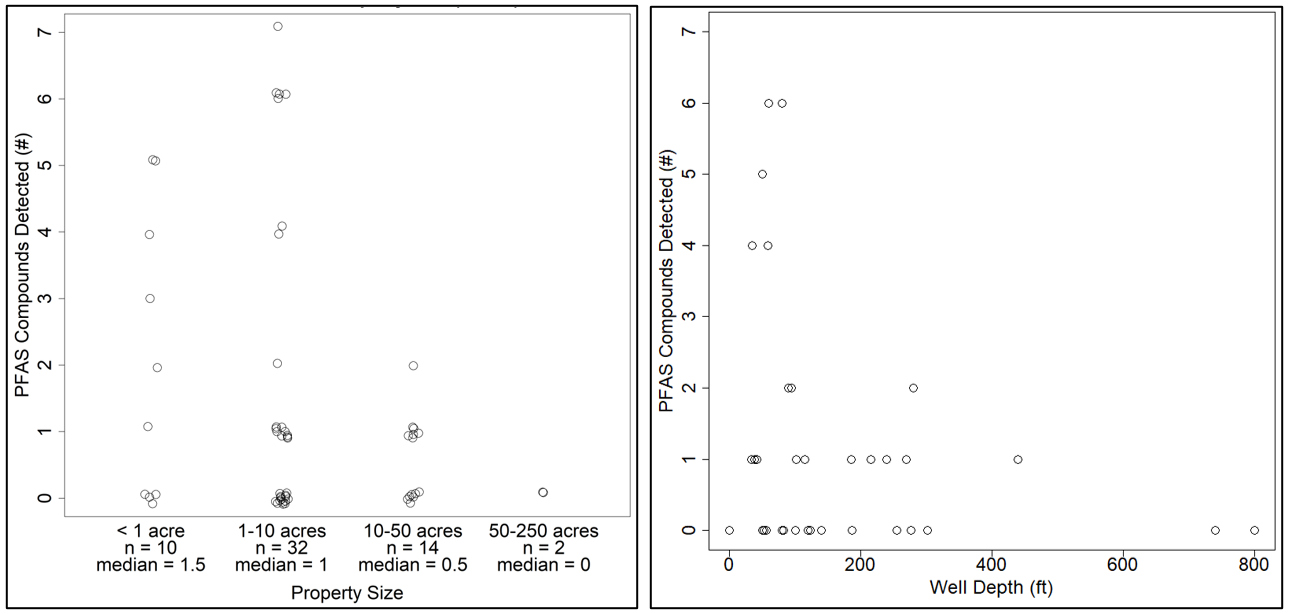
In general, shallower wells had more detections of PFAS than deeper wells. This is expected with a contaminant that enters groundwater from the ground surface; so the shallower the well, the more likely there is influence from surface land use. Wells on smaller lots also tended to have more PFAS detections than wells on larger lots. We hypothesize that this is because wells and septic systems are closer together on smaller lots. Septic systems recharge groundwater and PFAS enters wastewater from consumer products, so septic systems can be a source of PFAS to groundwater. For more general information on PFAS, visit this website.